? Gas Electric or Hybrid Cars Which one suit you
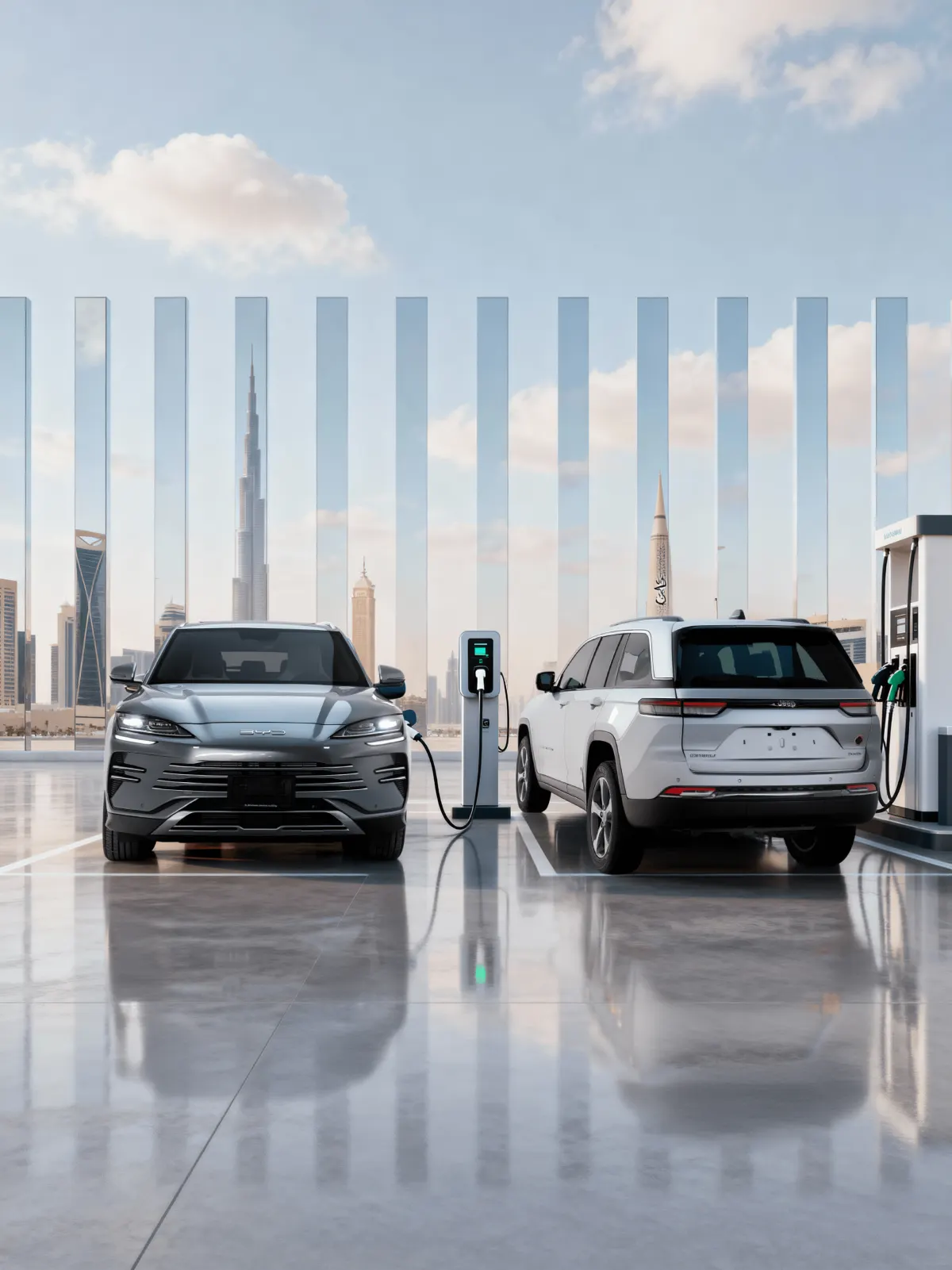
Selecting the right car is no longer a simple decision, with so many options on the market, including petrol cars, electric cars and hybrid cars. If you are planning to buy a new car,
it’s important to understand the differences between each type so you can select the vehicle that suits your budget, lifestyle and your daily driving requirements.
Petrol Cars
Petrol cars have been the most common choice in the Saudi market for many years. They run entirely on petrol and offer practical advantages, especially the freedom to travel long distances without worrying about charging stops.
Hybrid Cars
Hybrid vehicles use both a petrol engine and a self-charging electric motor. They can reduce fuel consumption by 30% to 50%, making them a strong option for drivers who want efficiency without sacrificing daily convenience. Their batteries eventually need replacement, and overall maintenance tends to fall within a moderate range.
Electric Cars
Electric cars rely completely on electricity and are engineered differently from petrol and hybrid models. They help drivers save significantly on running costs because they depend on electric charging rather than fuel.
Many drivers prioritize fuel efficiency and reducing energy consumption while others focus on maintenance costs, performance and car stability on the road. others consider the environmental impact of the vehicle and its overall contribution to sustainability.
Considering all these factors will help you select the right car.
Petrol, Hybrid, and Electric Cars: A Complete Comparison
Energy Efficiency
- petrol Cars: A lot of energy is lost as heat during engine combustion.
- Electric Cars: Extremely efficient, as the motor converts nearly all battery power directly into movement.
- Hybrid Cars: Combine gasoline and electric power, improving fuel efficiency—especially in city driving and stop-and-go traffic.
Maintenance Costs
- petrol Cars: Maintenance can be complex and costly due to many mechanical parts.
- Electric Cars: Require very little maintenance thanks to a simpler engine and fewer components.
- Hybrid Cars: Maintenance falls in between, depending on the combination of engine and battery.
Environmental Impact
- petrol Cars: High CO₂ emissions, which contribute to pollution.
- Electric Cars: Eco-friendly, with no tailpipe emissions and lower energy consumption.
- Hybrid Cars: Lower emissions than gasoline cars because they use electricity for part of their power.
petrol & Stability
- Gasoline Cars: Stability and handling depend largely on the car’s chassis and suspension.
- Electric Cars: Excellent stability thanks to batteries being placed low in the car.
- Hybrid Cars: Well-balanced, though the dual system can make things slightly more complex.
Performance & Top Speed
- petrol Cars: Usually reach higher top speeds, especially sports or luxury models.
- Electric Cars: Offer instant acceleration, though some limit top speed to save energy.
- Hybrid Cars: Perform well, using gasoline for higher-speed driving.
Purchase Cost
- petrol Cars: Often the most budget-friendly option.
- Electric Cars: Higher upfront cost due to battery technology.
- Hybrid Cars: Typically more expensive than gasoline cars but less than electric models.
Choosing the Right Vehicle
Your choice should fit your lifestyle. If you drive long distances frequently, gasoline or hybrid cars may be the best option. For mostly city driving, electric cars save money, require less maintenance, and are better for the environment. Understanding the differences between gasoline, electric, and hybrid vehicles helps you make a smarter, more informed choice for your next car in Saudi Arabia.




Theresa Webb
02 June 2024 at 03:30 pmThe wise man therefore always holds in these matters to this principle of selection. He rejects pleasures to secure other greater pleasures, or else he endures pains to avoid worse pains to the selection point. But in certain to all this circumstances
Cameron Williamson
02 June 2024 at 03:30 pmThe wise man therefore always holds in these matters to this principle of selection. He rejects pleasures to secure other greater pleasures, or else he endures pains to avoid worse pains to the selection point. But in certain to all this circumstances